If this is indeed “a thinly veiled attempt by France and Germany to undermine the UK’s dominance of financial services” then Europe really is finally awakening and standing up to the City of London. Anyway, it has certainly caused a stir and even evoked that bulldog spirit from UK so-called financial services minister who pledged he would “fight “line by line and minute by minute” to defend the free movement of capital.” Will the European countermeasures be enough though: some are calling for a Glass-Steagall type of legislation which would separate off commercial banks from jnvestment banking, making sure that ordinary depositors wouldn’t have their funds and deposit guarantees put at the disposal of high risk speculators. This would appear to be crucial.
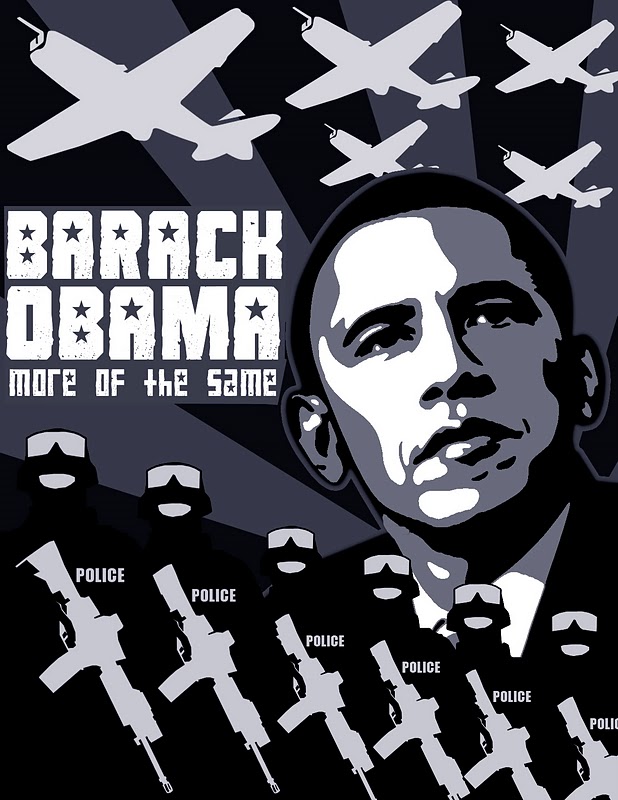
In spite of the fact that the United States faces no enemy anywhere in the world capable of opposing it on a battlefield, the Defense budget for 2011 will go up 7.1 percent from current levels. A lot of the new spending will be on drones, America’s latest contribution to western civilization, capable of surveilling large areas on the ground and delivering death from the skies. It is a peculiarly American vision of warfare, with a “pilot” sitting at a desk half a world away and pressing a button that can kill a target far below. Hygienic and mechanical, it is a bit like a video game with no messy cleanup afterward. The recently released United States Quadrennial Defense Review reports how the Pentagon will be developing a new generation of super drones that can stay airborne for long periods of time and can strike anywhere in the world and at any time to kill America’s enemies. The super drones will include some that can fly at supersonic speeds and others that will be large enough to carry nuclear weapons. Some of the new drones will be designed for the navy, able to take off from aircraft carriers and project US power to even more distant hot spots. Drones are particularly esteemed by policymakers because as they are unmanned and can fly low to the ground they can violate someone’s airspace “accidentally” without necessarily resulting in a diplomatic incident.
Diana Johnstone is the author of ‘Fools’ Crusade: Yugoslavia, NATO and Western Delusions’. She spoke to NLP on the wars in the former Yugoslavia, western involvement and the trial of Slobodan Milosevic.
Globalisation: Multipolar World or New World Order?
Cailean Bochanan
11th March, 2010
A proliferation of articles, mainly, I think, from the left have over the recent period exposed elite plans for a New World Order, meaning a world government enforcing the dictates of London, Washington and their allies. They make grim reading, and one comes away with a feeling of hopelessness in the face of such awesome power: there seems an air of inevitability about the triumph of this new order in its military and economic wars against all comers. The end goal of US/UK is, through NATO, the establishment of global hegemony, but a little more doubt about the realization of these grandiose goals might be in order. Whilst these writers point to the growing power of empire, albeit from an oppositional perspective, we at ITNT have been pointing to the emergence of a multipolar world with multiple foci of opposition to the globalisation of Anglo-American power. This markedly different perspective has struck me as an oddity, since we are both on the same side, that of opposition to US/UK imperialism. What could lie behind it?
Chinese leaders convening in Beijing for the annual plenary session of the National People’s Congress (NPC) – China’s ceremonial legislature – this week will, among other things, hammer out a blueprint for the ascendancy of the country’s currency, the yuan (or renminbi).
“In retrospect, Delhi’s hare-brained idea of a US-led “quadripartite alliance” against China, the “Tibet card”, the dilution of a 2003 strategic understanding with Iran, neglect of the traditional friendship with Russia, the lukewarm attitude toward the SCO, exaggerated notions within the establishment regarding the US-India strategic partnership as an alternative to an independent foreign policy and diversified external relationships – all these appear now like dreadful pantomimes out of India’s foreign policy chronicle of recent years that Delhi would rather not think about.”
The two-day visit by India’s National Security Advisor Shivshankar Menon to Kabul last week took place in the immediate context of the lethal terrorist strike on Indians in Kabul on February 26, but it underscored the need for a comprehensive rethink on Delhi’s Afghanistan policy.
One of the key arguments against the Eurozone of its detractors is that it has at its heart a flaw, namely, that it lacks the political unity necessary to make a single currency possible. Now that the sensational news of a European Monetary Fund has broken the cry goes up of “economic governance”. This is rich coming from those who want “economic governance” for the whole world and illustrates the fact that no matter what Europe does it can’t win. Or can it?
The Obama administration’s escalating provocations against China may come at a very high price. It would be unrealistic to assume that China will continue to remain impassive before the territorial threats, economic pressures and diplomatic insults without retaliating. China may decide to dump a large share of its US securities holdings, prompting other foreign investors to follow suit. Those who claim Chinese economic interests would suffer from such a sell off overlook the fact that China is in a comparatively better position to absorb the ‘shock’ of a deterioration in US economic relations and still land on her feet.
Late in 2005 I organised the first meeting in Scotland questioning the official 9/11 theory. Annie Machon was on that platform: now she can put across her message to millions via RT. RT has become a veritable phenomena. Their technique of interviewing western dissidents allows them to raise contentious issues with a certain deniability and they are no longer burdened by Marxism-Leninism as in the old days. Those who insist on unipolarity , the world under an unchallenged superpower, must explain the emergence of such an across the board challenge to the hegemony of the western media viewpopint.
We take the incredible technological advances that have been made in the past 50 years for granted. Technology that was once a distant dream is now a part of the fiber and fabric of our culture. A typical American home is equipped with microwaves, cell phones, cordless phones, PDAs, computers, and a wide assortment of technological gadgetry designed to make life easier.
However, what price are we paying for these advances and, more importantly, what price are our children paying for living in a world filled with these energy emitting devices?
The EU is also trying to curb US financial power by creating its own monetary fund – a replica of the Washington-based IMF.The need of a European fund has emerged during the Greek crisis, as European politicians have insisted financial troubles should be resolved at home.
This is pretty sensational news and confirms that Europe is fighting back- Britain’s role as PIGGY in the middle will be interesting.
European countries are blocking Wall Street banks from lucrative deals to sell government debt worth hundreds of billions of euros in retaliation for their role in the credit crunch.